“Today, more than ever, migration is the frontline of a wider battle to defend a vision of justice grounded in human dignity. This International Migration Review Forum is a key moment for us as civil society to return to the roots of our commitment and help the international community move toward a more united vision of humanity.”
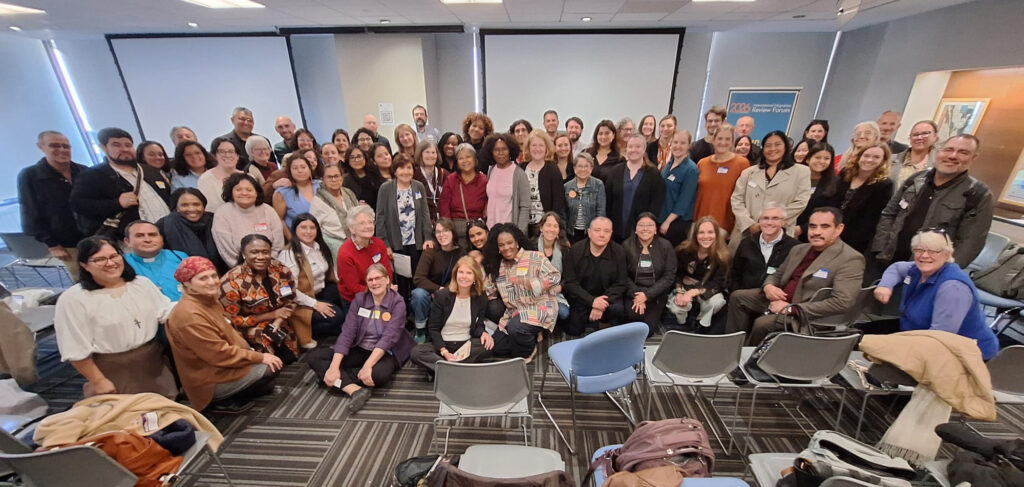
With these words, the International Catholic Migration Commission (ICMC) Secretary General Davide Bernocchi opened Uniting for the IMRF, the Civil Society Action Committee’s preparatory day held on 3 May 2026 in New York, ahead of the 2026 International Migration Review Forum (IMRF), taking place from 5–9 May.
Convened every four years, the IMRF reviews progress in implementing the Global Compact for Migration. This year’s Civil Society Day marked the culmination of a global preparatory process coordinated by the Civil Society Action Committee, an independent network of 54 civil society organisations hosted by ICMC.
Following the opening remarks, the solidarity ceremony grounded the day in lived realities. Participants honoured migrants, communities, families and activists who have lost their lives, remain missing, or continue to face danger because of conflict, detention, deportation and the failure of systems meant to protect them.

We also took a moment to remember our dear friend and colleague Claudia Interano, who is no longer with us. Claudia was a light and passionate leader for migrant communities and civil society in Latin America and beyond for many years, and we are privileged to have met and worked with her before she had to reduce her engagement. Civil society has lost a great advocate, but her legacy will continue to live in our hearts and work.
The opening panel then turned to shifting migration policies and lessons from local contexts. This panel was organised by the NGO Committee on Migration, which highlighted shifting migration policies in the United States, rollback of migrant rights, the criminalisation of migration and solidarity, and the increasing use of exclusionary narratives across different contexts. Panellists showed how communities are responding to these dynamics in real time. Experiences shared pointed to decentralised, community-led responses, including mutual aid, local protection, civilian documentation, and forms of care that often sit outside formal policy spaces. These practices help sustain people and movements under pressure, while keeping advocacy connected to what communities are facing directly.
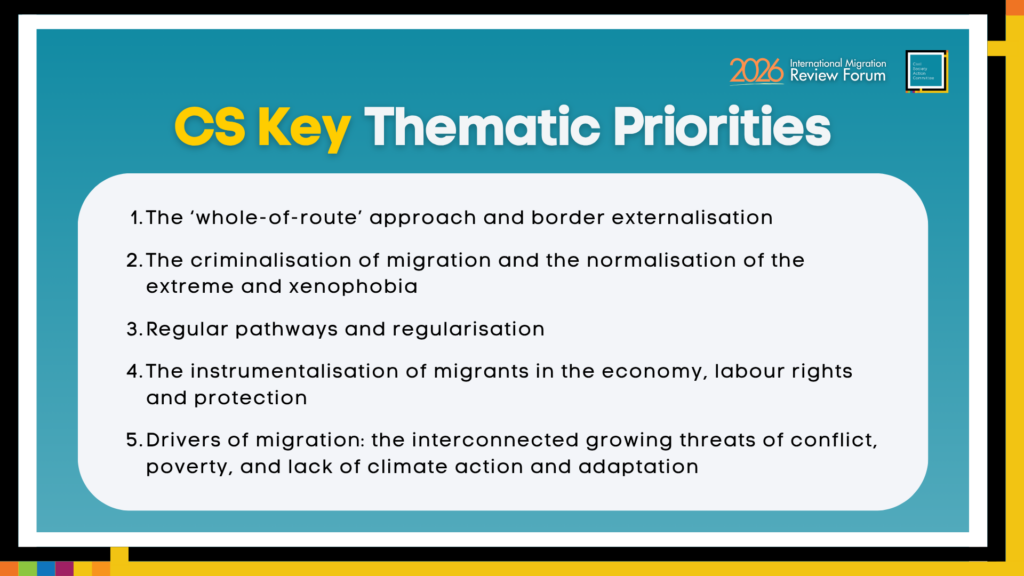
Following the panel, participants moved into thematic breakout discussions. These focused on border externalisation, criminalisation, regular pathways and regularisation, labour rights and protection, and the drivers of migration, including conflict, inequality and lack of climate action and adaptation.
Across these discussions, participants pointed to a widening gap between policy frameworks and lived realities. They also raised concerns about the risks faced by civil society actors in many contexts, and the need to centre migrant-led and grassroots perspectives more consistently in global processes.
The afternoon focused on regional mobilisation and action. Participants worked across regions to identify shared priorities and opportunities for collaboration over the coming years, looking beyond the IMRF itself.
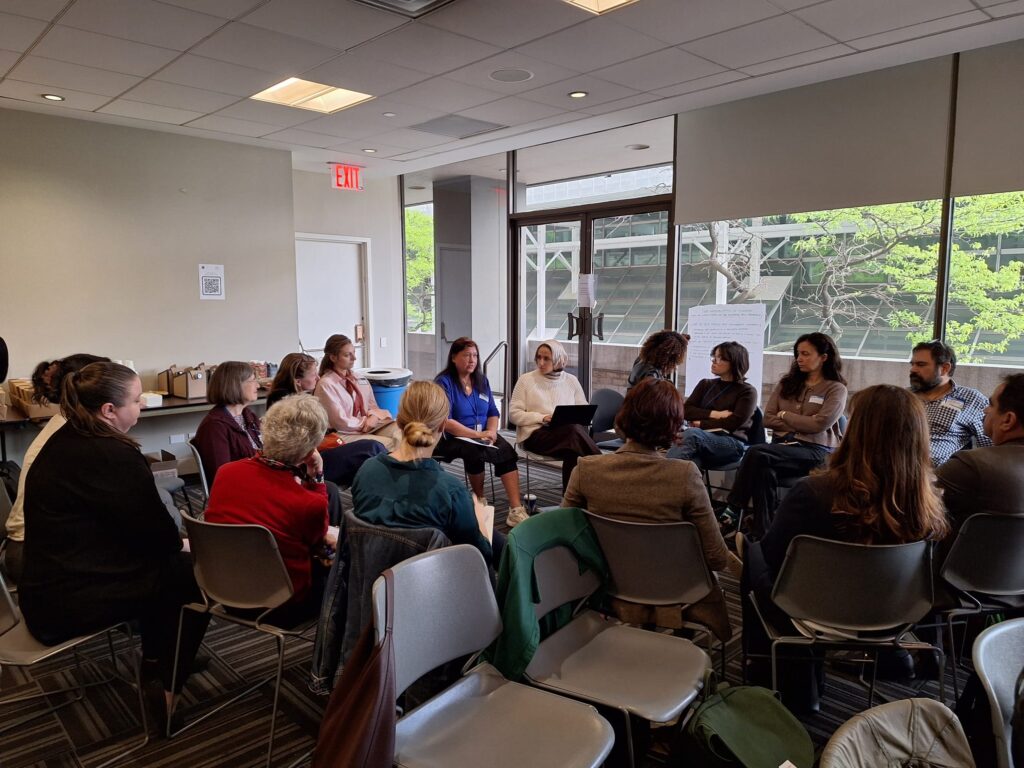
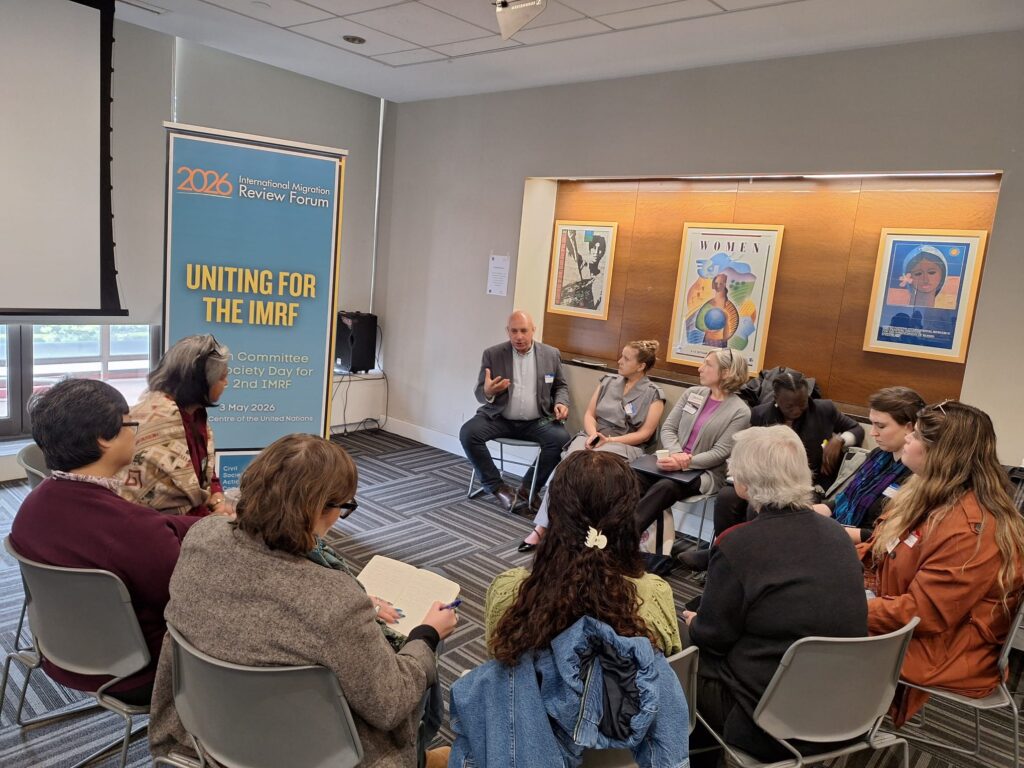
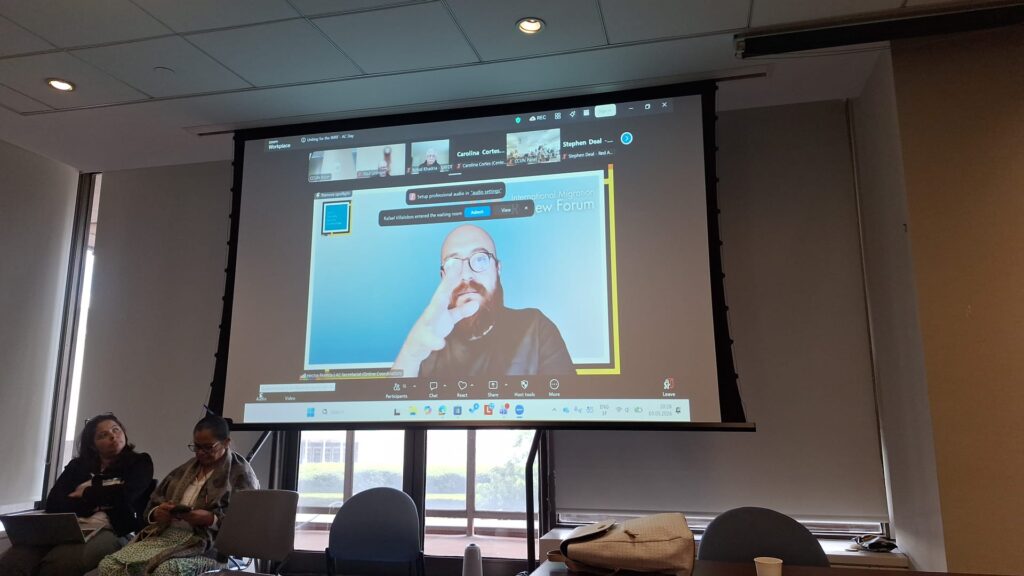
Report-backs from the regional groups reflected the need to:
- Defend and advance rights-based migration governance in increasingly restrictive contexts,
- Strengthen cross-regional solidarity and coordinated advocacy,
- Ensure that migrants, migrant-led organisations and grassroots actors are part of decision-making processes.

The day closed with a forward-looking discussion on priorities for the IMRF week and the work needed after New York. We reflected on how civil society can sustain coordinated advocacy, connect global discussions to local realities, and keep pushing for migration governance rooted in dignity, justice and human rights.
We wish all civil society representatives participating in the 2026 IMRF a productive week ahead. May this moment help keep migrant rights, dignity and lived realities at the centre of global migration governance.